
Can a Dentist Detect Oral Cancer During a Routine Checkup?
When you sit back in the dental chair, slide your sunglasses on, and listen to the familiar hum of equipment, your mind is almost certainly parked squarely on your teeth. You are probably thinking about whether you've been flossing enough, if that molar on the lower left is acting up, or how soon you can get back to your day. Most of us view a standard dental visit through a very narrow lens. It is all about cavities, sparkling enamel, and gum health.
Because we tend to separate oral care from overall physical health, a lot of people are genuinely surprised to learn the answer to a very important question: Can a dentist actually detect oral cancer during a routine checkup?
The short, reassuring answer is yes, absolutely. In fact, your regular dental team is often your best line of defense when it comes to catching early stage soft tissue abnormalities long before they turn into major health battles. For patients visiting Unident Dental Group in Walpole, MA, getting an oral cancer screening in Walpole, MA is built directly into standard preventive care, taking just a couple of minutes out of your appointment while offering incredible peace of mind.
Let's pull back the curtain on how this works, why your dentist is uniquely qualified to spot these issues, and what you can actually expect when you sit in the chair.
The Big Misconception: Dentists Do More Than Just Teeth
To understand how a dentist can catch oral cancer, it helps to look at what dental school actually entails. Dentists aren't just trained to fill cavities, design crowns, and scrape away stubborn tartar. They spend years studying oral pathology, facial anatomy, and the complex network of soft tissues that make up your mouth, jaw, and throat.
When a clinician looks inside your mouth, they are evaluating a lot more than your bite. They are scanning your mucosal linings, checking your lymph nodes, and observing the structural symmetry of your face and neck. They look at your tissues the way a seasoned mechanic looks under the hood of a car, not just listening for a noisy engine, but checking hoses, fluids, and underlying connections that keep the whole system running smoothly.
Because your mouth is a literal window into your overall bodily health, changes happening elsewhere can often display their earliest warning signs right on your gums, tongue, or inner cheeks.
What Actually Happens During the Screening?
If you have never paid close attention to this part of your visit, you might picture some high tech machinery or an uncomfortable medical procedure. In reality, a soft tissue screening is entirely noninvasive, completely painless, and surprisingly fast. It usually weaves right into the natural flow of your cleaning without skipping a beat.
Here is how a typical professional check breaks down step by step:
The Hands On Neck and Jaw Check
Your clinician will often start before you even open your mouth. Using a gentle, systematic touch with their fingertips, they will feel along your jawline, under your chin, and down the sides of your neck. They are checking your lymph nodes and deep tissue structures for tenderness, swelling, or unusual lumps hidden beneath the skin. If you have ever had a general practitioner feel your throat during a bad winter cold, this will feel very familiar. It lets the team catch swollen glands or asymmetries that might need a closer look.
Inspecting the Lips and Outer Boundaries
Next, the focus moves right to your lips. Your dentist will pull back your lips to check both the inner and outer surfaces. Lips take a massive amount of daily wear and tear, especially from sun exposure if you spend time outdoors. Your clinician checks for persistent dry patches, cracks that refuse to heal, or unusual discoloration.
Checking the Cheeks and Gums
Moving inside the mouth using a small dental mirror and a bright light, the team gently pulls back your cheeks. They hunt for rough patches, areas that feel unexpectedly thick, or stubborn white and red spots that won't wipe away. You might hear a casual request to move your tongue or cheeks around so they can see every angle. You will mostly just feel the smooth edge of the mirror pressing lightly against your inner tissue.
The Tongue and Floor of the Mouth
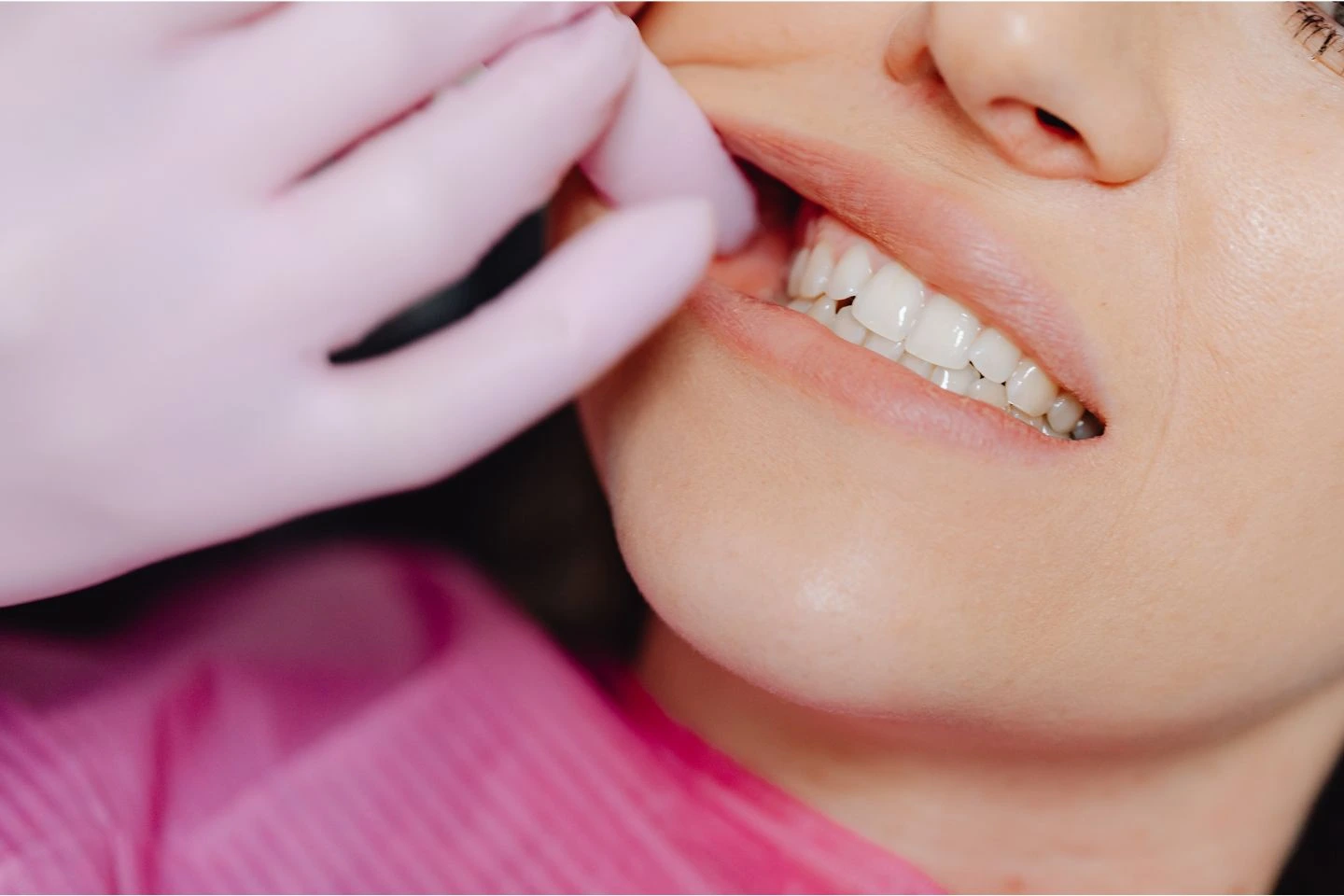
This is perhaps the most critical part of the exam. Abnormal cellular changes love to hide in the darker, harder to see corners of the mouth, particularly along the lateral borders and underneath the tongue. Your dentist will often use a piece of gauze to hold the tip of your tongue softly, moving it from side to side to inspect the top, bottom, and edges. They will also look underneath your tongue right along the floor of your mouth, which is a very common hiding spot for subtle lesions.
A Quick Glance at the Throat
To wrap things up, the clinician will ask you to tilt your head back slightly so they can take a quick look at the roof of your mouth, known as your palate, along with the back of your throat near your tonsils. Once that final glance is finished, the screening is complete.
Why Silence Is the Real Risk
One of the trickiest things about early stage oral tissue changes is that they are usually completely painless.
If you get a tiny scrape from a sharp piece of crunchy bread or a pesky canker sore from stress, you know about it immediately because it stings every time you eat or talk. Pain acts as our body's loudest alarm bell. But early stage oral abnormalities rarely throw up loud red flags like throbbing aches or sharp pains. They just sit there quietly.
Because early detection vastly improves treatment success rates, having a trained professional check your mouth during your routine preventive visits acts as a major safety net. By the time a patient notices a sore because it hurts, valuable time may have already slipped by. Routine professional checks bridge that gap entirely.
What Happens If They Spot Something Unusual?
A common fear among patients is what happens if the dentist actually finds a questionable spot during the exam. First off, take a deep breath. Finding an unusual patch, bump, or sore does not automatically mean something scary is going on.
Our mouths take a daily beating from hot coffee burns, accidental cheek bites, and abrasive foods. If your clinician notices an area that looks a bit off, they will often simply ask you to keep an eye on it and pop back in after a couple of weeks to see if it healed up on its own.
If a spot looks more stubborn, has lingered past a standard observation window, or shows characteristics that warrant closer inspection, they might suggest a simple, conservative follow up test or connect you with a trusted specialist. Getting clear answers early is always the smartest, safest way to handle your health.
Don't Wait to Get Checked
Taking charge of your well being doesn't have to be complicated, especially when you have an experienced team in your corner. If you are due for your routine cleaning, or if you have noticed a weird spot in your mouth that just won't quit, let us help you get some definitive answers. Contact Unident Dental Group in Walpole, MA today to schedule your visit and request your next comprehensive oral cancer screening in Walpole, MA.
Frequently Asked Questions
Q: Can my dentist really detect oral cancer during a standard checkup?
A: Yes. Dentists receive specialized training in oral pathology and tissue health, allowing them to spot early warning signs and subtle tissue shifts during routine visual and physical exams.
Q: Do I need to request an oral cancer screening specially?
A: Usually, no. At most modern dental practices, including Unident Dental Group, a soft tissue check comes included automatically as a standard part of your routine preventive dental exam.
Q: Is an oral cancer screening painful or uncomfortable?
A: Not at all. The screening is entirely noninvasive and painless. You will only feel the clinician gently looking inside your mouth with a mirror and feeling the outside of your jaw and neck with their fingers.
Q: How often should I get screened?
A: Dentists generally perform a soft tissue check during routine preventive visits. Your dentist will recommend the screening frequency that is appropriate for your individual needs.
Q: Can I check my own mouth for oral cancer at home?
A: Yes! Doing a quick monthly check in front of your bathroom mirror helps you notice new sores, lumps, or color shifts early. Just remember that home checks are meant to complement, not replace, professional clinical exams.


Hours
Monday: 9 a.m.–4 p.m.
Tuesday: 9 a.m.-4 p.m.
Wednesday: 9 a.m.-5 p.m.
Thursday: 9 a.m.-6 p.m.
Friday: 9 a.m.-6 p.m.
Saturday: Closed
Sunday: Closed



© 2026 Unident Dental Group | All Rights Reserved | Privacy Policy | HIPAA Policy | Website Design by Remedo